
When in doubt
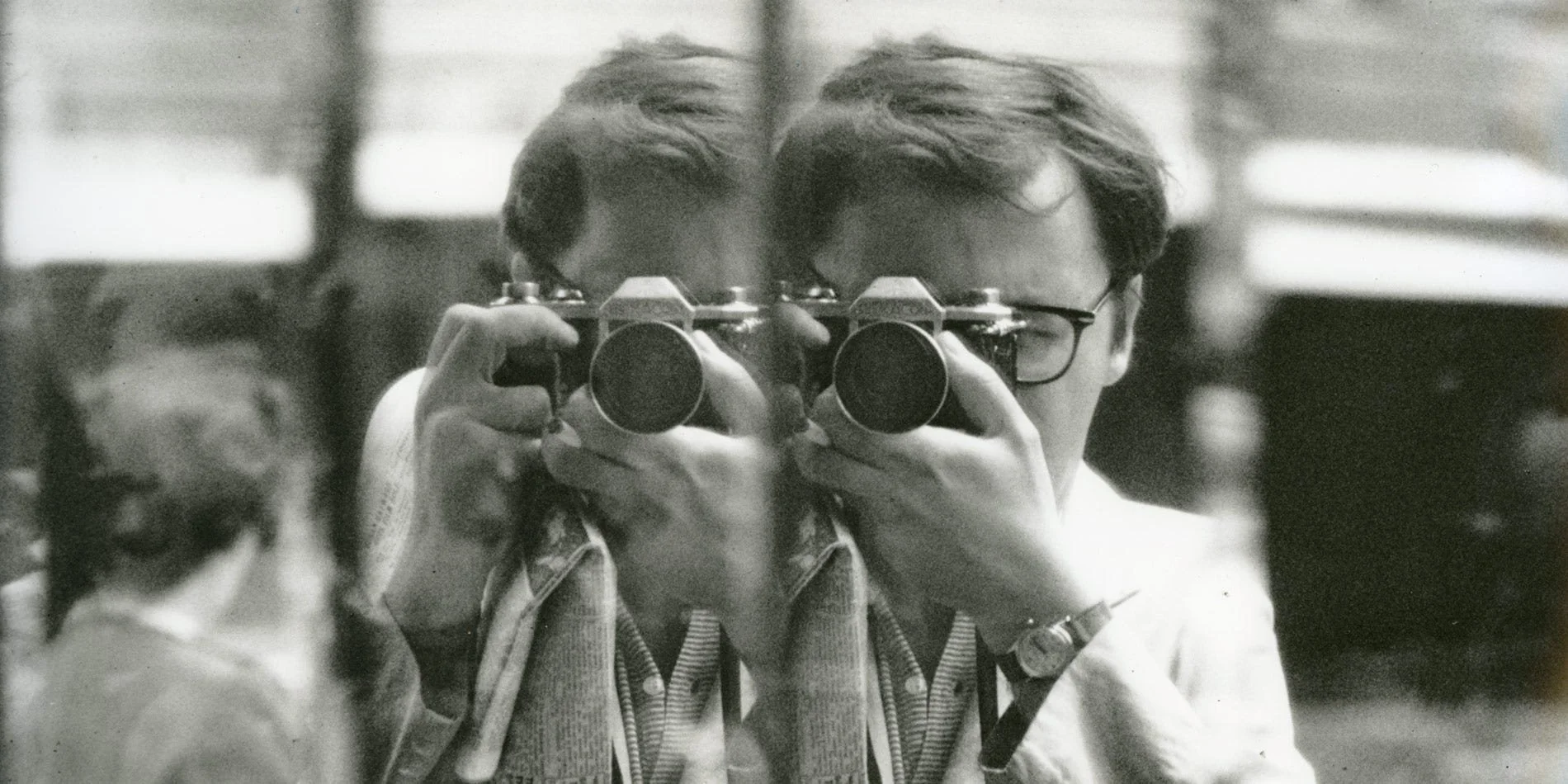
Saul Leiter with camera © Saul Leiter Foundation
Anyone who travels on roads should be aware of the speed limits that apply to the specific stretch they are currently travelling on. The limit is created to match the need for vehicles to be able to move along whilst matching the need for the safety of all road users and pedestrians. There are always some who think the limits should be faster, or those who simply ignore them. It is all about speed. Urgency over safety. Every second counts. Thirty-six hours must be crammed into twenty-four.
There are also those who seem to approach their photography in a similar fashion. They either rush along, randomly pointing a lens at things, or they spend ten minutes in one spot and fire off over a thousand shots, spraying and praying that they have hit one decent shot. Do you recognise yourself in this description? I certainly do. Not all the time, but it is easy to default into this setting when you are used to life being manic and you are struggling to slow down. Sometimes for me, it is because I’m having a dopamine surge and I suddenly want to photograph the world! This is not something you should feel guilty about, but it will help you to identify when you are falling into the photographic speed trap.
This is undoubtedly one of the reasons for the resurgence of analogue photography in recent years. Whether you are shooting with film, or enjoying cameraless image making (cyanotypes, pinhole cameras, photograms, anthotypes etc.), you are immediately constrained. Whether the process forces you to work slowly, you are restricted through cost, or possibly both, the brakes are well and truly applied. Although I dabbled in the darkroom with my Dad when I was a kid (the darkroom was a bedroom with curtains hung everywhere to stop light getting in and reverted back to a bedroom once we’d finished and packed everything away), it was when I went to university that I was fully exposed (pardon the pun) to film and cameraless photography.
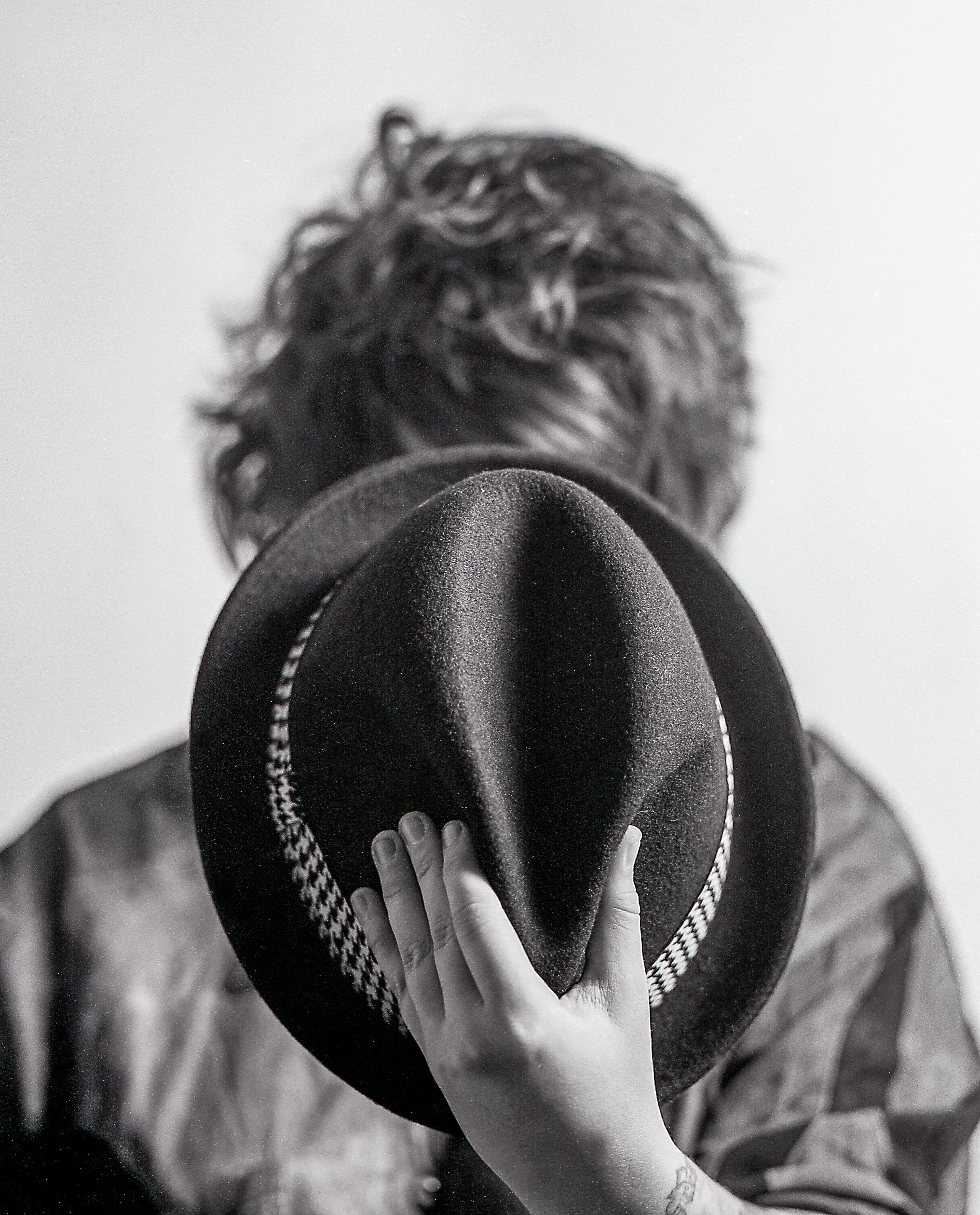
Anti-portrait No.1, 2015 shot in 120 film © Iam Burn
I was a mature student amongst many younger people, most of whom had never touched a film camera before. For some, the idea of learning darkroom techniques and using film cameras was a waste of time. They wanted to shoot digital – instant gratification and editing that can be done anywhere if you have a laptop. I always stressed that it was worth embracing film photography as it really made you think before you hit the shutter button. Developing your own film and printing images slowed you down and made you appreciate it even more when you had a print you were proud of. It also showed you how film choice impacted on your final images. It is why Fujifilm cameras are popular – the range of film simulations harks back to the film era. You may have anything from one to thirty-six exposures, depending on whether you are using large format, 120 or 35mm film.
Film and developing is even more expensive today than it was when I was a student. At the time of posting, Fuji Velvia 100 35mm colour film is £29.99 per roll. That’s almost 86p per shot, without developing. It will be £1.30+ with developing and negative scanning. At that price, you bloody well slow down and make very considered choices! Fujifilm Neopan Acros II 35mm B&W Film is cheaper but still about 85p per shot, developed and scanned.
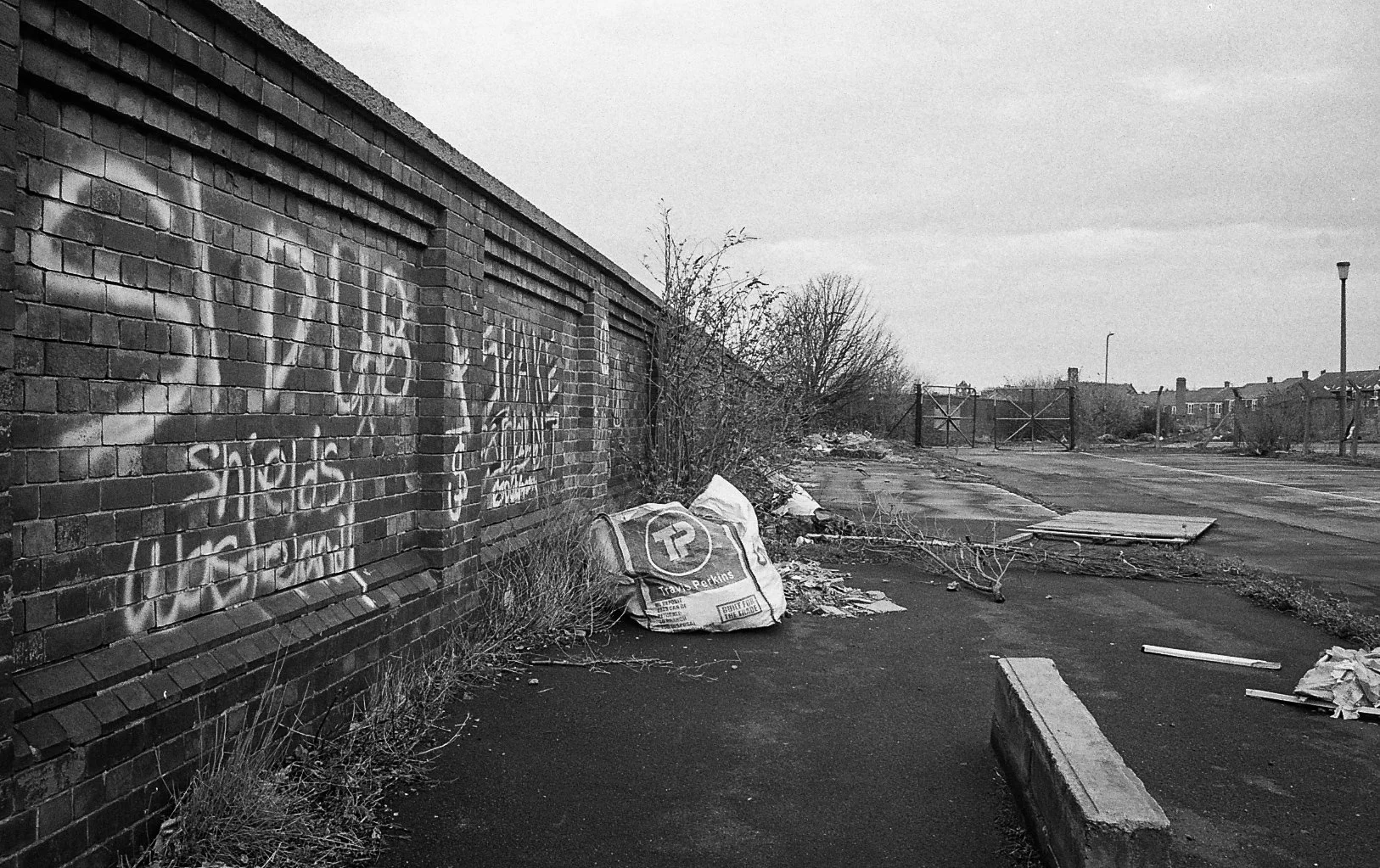
Riverside wasteland, 2015, 35mm © Iam Burn
Am I suggesting you need to rush out and buy a film camera and ditch the digital? Absolutely not. Would I discourage you from picking up a cheap second-hand film camera and having a go? Absolutely not. I think your photography will benefit from shooting film because of the reasons I have mentioned. It can be a lot of fun, and also heartbreaking. Getting your negatives back and realising you’ve made a mistake on an image you thought would be amazing never fails to kick you in the cheeky portions. And getting an image you are proud of gives you a rush like eating your bodyweight in M&Ms (other forms of excessive sugar are available).
“When in doubt, take more time.” - John Zimmerman
You can still embrace the analogue style of creativity with your current kit of choice. It is about adopting the process. One way to start with is switching off any image playback on your camera after you have pressed the shutter. I am not suggesting you never look at an image you have taken – you may need to check exposure in tricky light, for example. But ‘chimping’ at every image isn’t healthy. It stops you from engaging in the moment. You are missing opportunities by overanalysing every image you have taken.
Spend a bit of time looking around a location before even lifting the camera to your eye. Look at the different shooting angles. See where the light falls, or where interesting shadows appear. Is there an interesting texture on a wall? Work out what you want to include and/or remove from the scene. This also applies to studio shooting – see how the light works from different angles, add and subtract light to see how it changes the look of the space and the person/products being photographed.
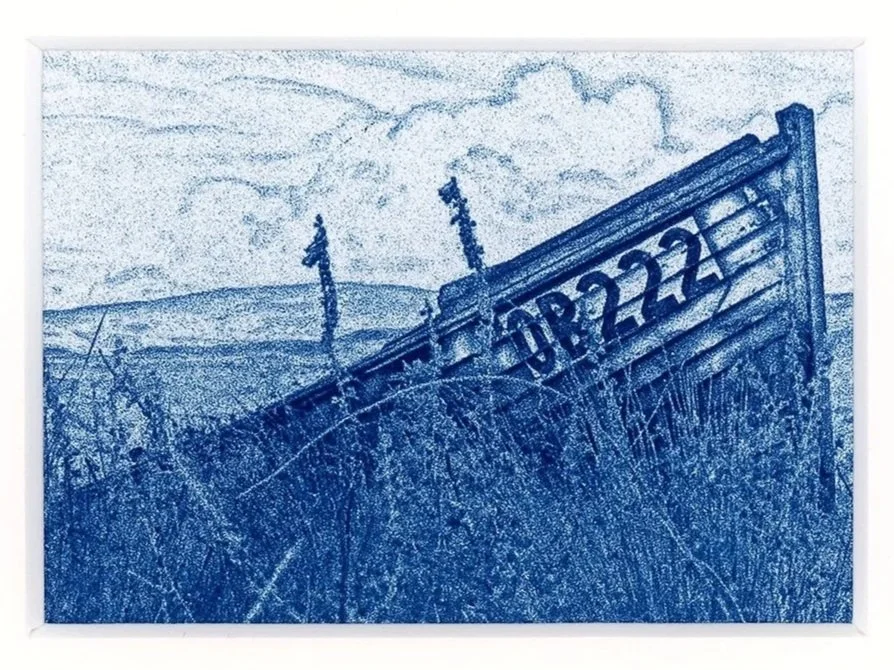
Abandoned vessel, 2016, Cyanotype © Iam Burn
I am not suggesting you only take one or two images and nothing more. You may find that there are seven or eight interesting angles to a scene. There may only be one – maybe none at all. It may be that you make a note to come back to a place at a different time or under different weather conditions and maybe only take a quick reference photo. You may wish to take a few shots of certain scenes as the light is changing rapidly – cloudy days with sunny spells, golden hour changing to blue hour etc. The point is these are considered shots. This is not spray and pray. This is not arriving at a scene, shooting quickly and speeding along, or turning your camera into an optical AK-47 and hoping for the best.
I know some will say you may as well shoot like a demon as it doesn’t cost anything in the digital age. Well, it does cost you. Firstly, if you are shooting with a mechanical shutter, it is technically applying wear and tear at a greater rate. This isn’t a big problem in most modern cameras, but a fact, nonetheless. The big impacts are regarding time and storage. If you need to scour two-thousand photos, looking for your favourites, it will be time consuming. It may also bore you senseless! Culling and editing images isn’t everyone’s idea of a good time. If you only have 25% of that total to work through, it will save you a lot of effort and reduce the time spent at the computer.
If you find it hard to delete photos, they will need be stored somewhere. The cost of hard drive storage, especially SSD, has gone through the roof lately (thanks to the needs of AI farms) so local storage can be expensive. Cloud storage is a good option, but that will increase the more you accumulate. For example, my RAW files are usually around 70-80MB per image. I will benefit if I can reduce the number of unnecessary images taken.
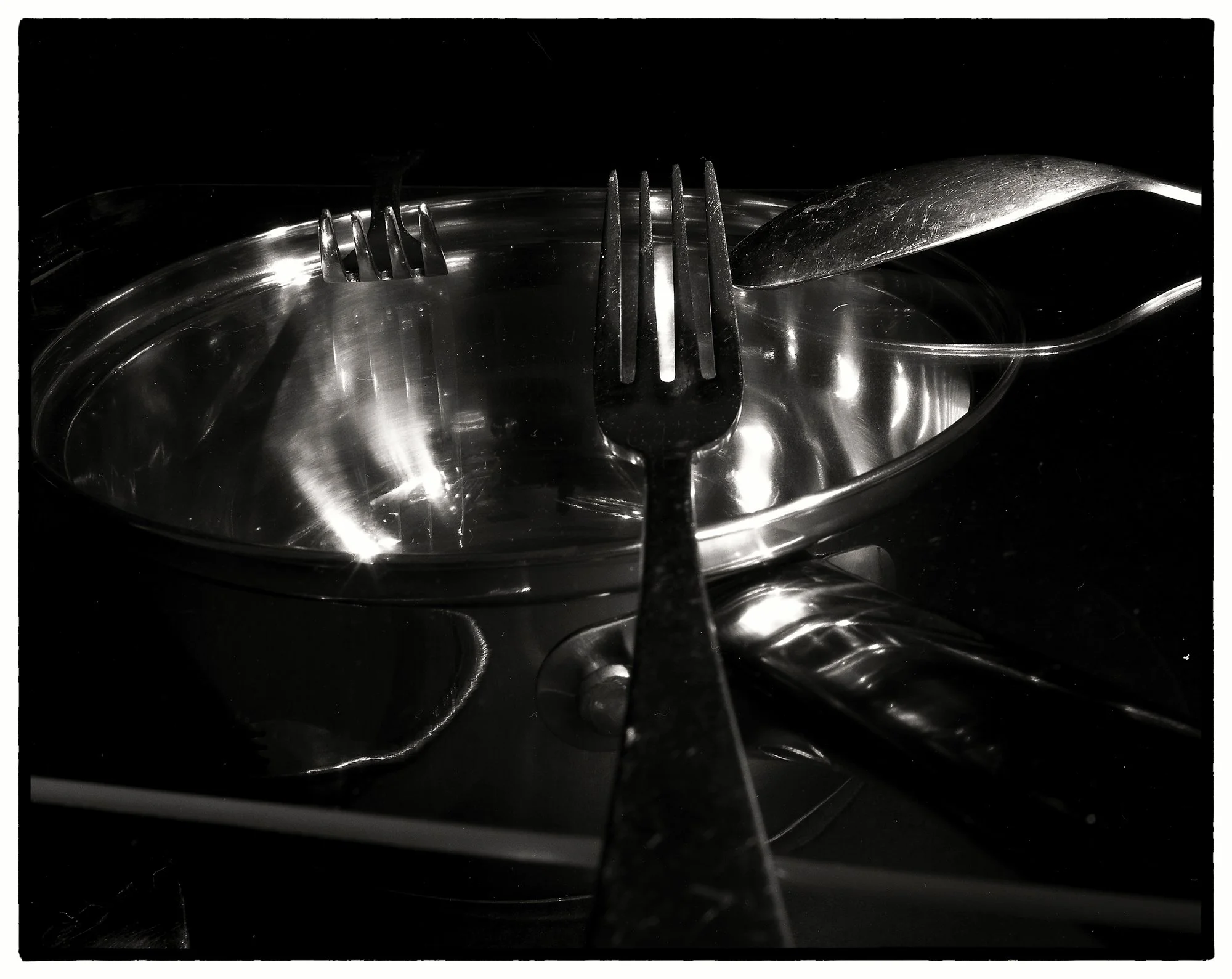
Kitchen study, 2015, 5”×4” negative © Iam Burn
The biggest benefit I believe you get by thinking and acting as if you are shooting film is you are likely to take your time and enjoy the moment. You will be more present. You will appreciate the overall experience. You will notice everything going on around you. Your senses will notice more. Your engagement with your photography will increase. Surely that can’t be a bad thing, right? Slow your photography and you will gain in multiple ways. Oh, and don’t speed like a twat on the roads either!
